
Sinus Lift Alexandria
Prepare Your Upper Jaw for Dental Implants
Some patients can receive dental implants soon after their initial consultation. Others, though, need some preparatory care. If you fall into the latter category, one procedure that you might need is known as a sinus lift. Our Alexandria oral surgery team handles this advanced service with great care and attention to detail. We want to set your smile up for long-term success! Continue reading below to learn more, or contact us directly to request a consultation.
Why Choose Northern Virginia Oral, Maxillofacial & Implant Surgery for Sinus Lifts?
- Highly Skilled Oral Surgery Team
- Treatment Supported by Advanced Technology
- Dental & Medical Insurance Accepted
What Is a Sinus Lift?
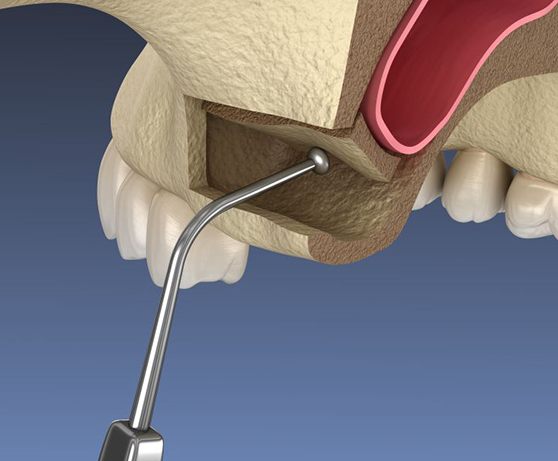
A sinus lift is essentially a special type of bone graft. It is used to fortify and thicken the upper jawbone prior to the placement of dental implants. It prevents the implants from penetrating the sinus membrane and causing complications.
During this procedure, we carefully access the sinus membrane through the upper jaw and then move it upward. Then, we place a bone graft beneath it to secure it in its new place. Once your body accepts the graft and integrates the new tissue, your upper jaw should serve as a hospitable environment for dental implant posts.
Why Would a Sinus Lift Be Necessary?
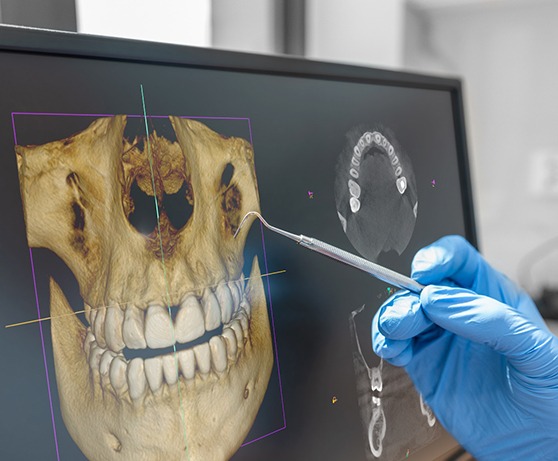
Not everyone who wants to replace their upper teeth needs a sinus lift before they get dental implants, but many patients do. You might need this procedure if:
- It has been some time since you lost your natural teeth: Without tooth roots to stimulate it, the bone tends to deteriorate and shrink.
- Your natural anatomy makes a sinus lift necessary: You may have a naturally large sinus or naturally thin upper jaw.
- Your upper jaw suffered damage: For example, if you had facial injuries, you might need this procedure.
What Can You Expect Before a Sinus Lift?
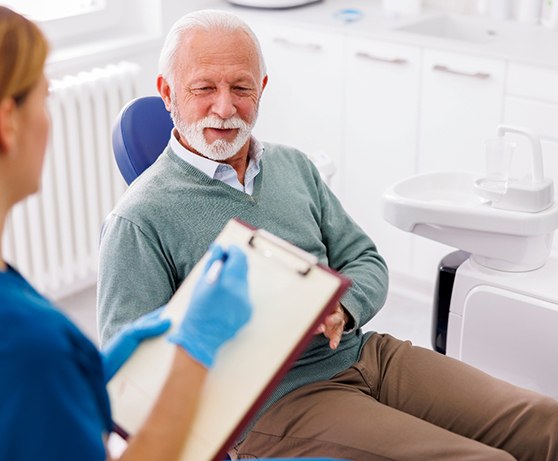
You can expect a careful treatment planning process. In order to determine if a sinus lift is necessary, we will use advanced imaging equipment to get a look at your upper jaw and other relevant structures. Often, we employ our CBCT machine for this, which creates highly detailed, three-dimensional images of the scanned areas.
Then, we will plan the details of your procedure. We will answer your questions and provide any necessary pre-op instructions. For example, you might need to temporarily stop taking certain medications, such as blood thinners.
Recovering from a Sinus Lift Procedure

Thanks to local anesthesia and possible sedation, the procedure itself should be comfortable. Afterward, you can expect to experience some soreness and swelling. To support your body’s healing process, you may need to avoid using a straw or blowing your nose. You may also need to get extra rest and follow other instructions from our team.
For most patients, swelling and discomfort are gone within 7 – 10 days. However, it may take 4 – 9 months before the bone heals and is ready to accept dental implants.